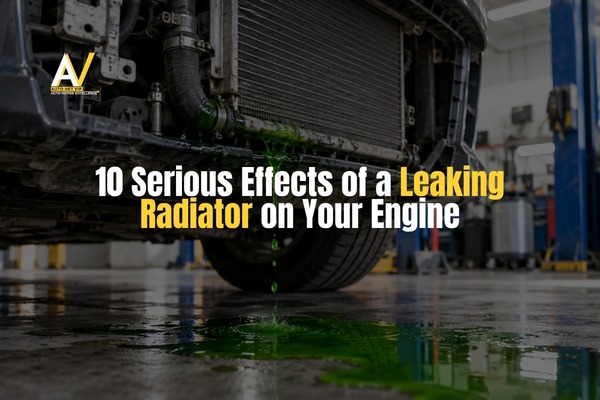
You have probably spotted it before. A puddle under the car, a faint sweet smell on a cold morning, or the temperature gauge creeping slightly higher than normal.
You might even be telling yourself that the car will be fine for a few more miles.
The problem is that a leaking radiator is not something you should ignore. A relatively small cooling system fault can eventually cause serious and expensive engine damage if coolant continues to escape.
At AutoNet VIP, we regularly inspect vehicles with cooling system problems. In many cases, spotting the problem early can prevent much more serious damage later.
Whether you drive an older petrol or diesel vehicle, a family car used for the school run, or a newer hybrid, keeping the cooling system in good condition is essential.
Here are 10 serious effects a leaking radiator can have on your engine.
1. Engine Overheating
The radiator plays a vital role in controlling engine temperature.
Coolant circulates through the engine, absorbs heat and then passes through the radiator where that heat is released.
When coolant escapes because of a leaking radiator, there may eventually be too little coolant inside the system to control the engine temperature effectively.
The result can be engine overheating.
According to the RAC coolant leak guide, coolant leaks can cause an engine to overheat and may lead to serious engine damage if the problem is ignored.
Signs of overheating include:
- The temperature gauge moving towards the red
- A temperature warning light appearing
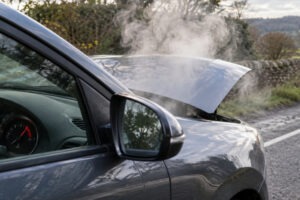
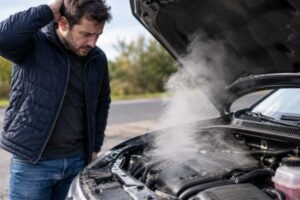
- Steam coming from underneath the bonnet
- A noticeable loss of engine performance
- A strong hot or sweet smell
If your vehicle begins overheating, continuing to drive can significantly increase the risk of engine damage.
If you suspect a radiator problem, our heating and cooling system services include radiator replacement, thermostat replacement, water pump replacement and cooling fan diagnostics.
2. Blown Head Gasket
One of the most serious consequences of repeated engine overheating is a blown head gasket.
The head gasket sits between the engine block and cylinder head. It helps seal combustion pressure while keeping engine oil and coolant in their correct passages.
When an engine becomes excessively hot, the cylinder head and surrounding components can expand. This places significant stress on the head gasket.
Eventually, the gasket can fail.
The RAC head gasket guide identifies overheating as one of the common causes of head gasket failure.
Possible symptoms include:
- White smoke from the exhaust
- Engine overheating
- Loss of power
- Coolant disappearing without an obvious external leak
- Milky contamination inside the engine oil
- Bubbles appearing inside the coolant reservoir
A head gasket repair can be significantly more expensive than fixing the original cooling system leak.
That is why investigating coolant loss early is so important.
3. Warped Cylinder Head
The cylinder head is manufactured to precise tolerances and needs to remain perfectly aligned with the engine block.
Excessive heat can cause the metal to distort.
When a leaking radiator causes repeated overheating, the cylinder head may eventually warp.
Even relatively small amounts of distortion can prevent the cylinder head from sealing correctly.
This may lead to:
- Reduced engine compression
- Loss of power
- Rough running
- Coolant entering the combustion chamber
- Oil leaks
- White exhaust smoke
- Head gasket failure
Repairing a warped cylinder head may require specialist machining or complete cylinder head replacement.
Catching a cooling system problem before repeated overheating occurs can help prevent this type of damage.
4. Complete Engine Failure
At the most serious end of the problem is complete engine failure.
Engines are designed to operate within a controlled temperature range.
When coolant becomes dangerously low and the engine continues operating at excessive temperatures, internal components can expand beyond their normal limits.
Oil can also become less effective at protecting moving components when exposed to extreme heat.
In severe cases, pistons, bearings and other internal components can suffer permanent damage.
The engine may eventually seize and stop completely.
Once this happens, repairing the vehicle may require extensive internal engine work or even a replacement engine.
If major damage has already occurred, AutoNet VIP also provides engine rebuild and replacement services.
However, dealing with the original radiator or coolant leak before serious overheating occurs is always preferable.
5. Internal Corrosion
Engine coolant does much more than simply carry heat away from the engine.
Correct coolant contains corrosion inhibitors that help protect metal surfaces throughout the cooling system.
These include:
- The radiator
- Engine coolant passages
- Water pump
- Thermostat housing
- Heater matrix
- Coolant pipes and connections
When coolant repeatedly leaks from the system, its protective properties can be reduced.
Problems can become worse if the system is repeatedly topped up using plain water instead of the correct coolant mixture.
Over time, corrosion can develop inside the cooling system.
This can result in blocked coolant passages, weakened components and additional leaks.
Using the correct coolant and keeping the cooling system properly maintained helps protect these components.
Our car servicing team in Harlow can inspect coolant condition and identify signs of cooling system problems during routine maintenance.
6. Engine Oil Contamination
A radiator leak itself does not normally cause coolant to enter the engine oil.
However, if coolant loss causes severe overheating and the head gasket becomes damaged, coolant and engine oil may begin mixing.
One common warning sign is a creamy or milky substance underneath the oil filler cap.
You may also notice unusual contamination on the dipstick.
Coolant contaminated engine oil cannot lubricate engine components as effectively as clean oil.
This may increase wear on:
- Engine bearings
- Crankshaft components
- Camshafts
- Pistons
- Internal engine surfaces
Ignoring contaminated oil can eventually lead to significant engine damage.
If you discover milky oil combined with coolant loss or overheating, the vehicle should be inspected as soon as possible.
7. Damage to Other Cooling System Components
A leaking radiator does not only affect the radiator.
The entire cooling system works together.
If coolant levels remain too low, additional components may be placed under increased stress.
These can include:
Water pump
The water pump circulates coolant around the engine.
Low coolant levels may affect circulation and can contribute to water pump damage.
Thermostat
The thermostat controls coolant flow according to engine temperature.
Cooling system contamination, overheating or age can cause a thermostat to stop working correctly.
If you are experiencing unstable engine temperatures, read our guide to the common symptoms of a bad car thermostat.
Cooling fan
The cooling fan helps reduce coolant temperature when airflow through the radiator is limited, particularly when the vehicle is stationary or travelling slowly.
A cooling fan fault combined with low coolant can cause overheating very quickly.
Radiator hoses
Repeated heat exposure and pressure changes can weaken ageing radiator hoses and connections.
One initial cooling system fault can therefore contribute to several additional problems if it is ignored.
8. Reduced Fuel Efficiency
A cooling system problem can also affect how efficiently your engine operates.
Modern engines rely on information from temperature sensors to control fuel delivery, ignition timing and other engine functions.
If the engine is consistently operating outside its intended temperature range, the engine management system may adjust how the vehicle runs.
You might notice:
- Higher fuel consumption
- Reduced performance
- Uneven engine response
- Cooling fans running more frequently
- Warning lights appearing
There are many possible causes of poor fuel economy, so increased fuel consumption alone does not prove that your radiator is leaking.
However, when it appears alongside coolant loss or abnormal engine temperature, the cooling system should be inspected.
9. Unsafe Driving Conditions
A leaking radiator can eventually become more than a mechanical problem.
It can become a safety problem.
If your engine suddenly overheats while travelling on roads such as the M11, M25, A414 or A10, you may need to stop unexpectedly.
Steam from underneath the bonnet may also reduce visibility.
More serious engine damage could result in a sudden loss of power.
If your temperature warning light appears while driving:
- Remain calm
- Reduce your speed gradually
- Avoid placing additional load on the engine
- Move to a safe location when possible
- Switch the engine off
- Do not immediately remove the coolant cap while the system is hot
Cooling systems operate under pressure and hot coolant can cause serious burns.
Wait until the engine has cooled before attempting to inspect the coolant reservoir.
10. Reduced Resale Value
Good vehicle maintenance also matters when it is time to sell or part exchange your car.
A history of overheating, head gasket failure or significant engine repairs may concern potential buyers.
Visible coolant leaks can also be identified during mechanical inspections.
A car with a well maintained cooling system and documented service history is generally more attractive to buyers than one showing signs of neglected maintenance.
Fixing cooling system faults quickly can therefore help protect both the engine and the long term condition of your vehicle.
How to Spot a Leaking Radiator Before It Causes Serious Damage
Recognising the early signs of a leaking radiator could save you from a much more expensive repair.
Look out for the following warning signs.
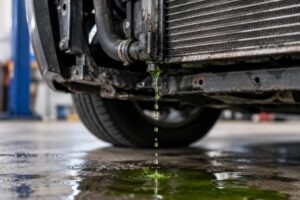
Coloured liquid underneath the car
Coolant may appear pink, green, blue, orange or another colour depending on the type used in your vehicle.
Water underneath a vehicle is not always coolant because air conditioning systems can naturally produce condensation.
However, coloured liquid or liquid with a sweet smell should be investigated.
Sweet smell
Engine coolant often has a distinctive sweet smell.
If you notice this smell around the front of your car after driving, coolant may be escaping.
Falling coolant level
Check your coolant reservoir regularly when the engine is completely cold.
If the level repeatedly falls below the minimum mark, there is probably a leak somewhere in the cooling system.
The AA guide to checking engine coolant provides useful advice on checking coolant levels safely.
Rising temperature gauge
Your temperature gauge should normally remain relatively stable once the engine reaches operating temperature.
Unexpected movement towards the hot area of the gauge should not be ignored.
Visible coolant around the radiator
Look for damp areas, dried coolant residue or staining around:
- The radiator
- Radiator hoses
- Hose connections
- Coolant reservoir
- Thermostat housing
Heater suddenly blowing cold air
Your vehicle heater uses hot engine coolant.
If the coolant level becomes extremely low, the heater may suddenly begin blowing cold air even though the engine itself is overheating.
This can be an important warning sign.
What Causes a Radiator to Leak?
Radiators can begin leaking for several reasons.
Common causes include:
- Age and corrosion
- Stone or impact damage
- Cracked plastic radiator tanks
- Damaged seals
- Loose hose connections
- Excessive cooling system pressure
- Incorrect coolant
- Frozen coolant caused by insufficient antifreeze protection
- Previous accident damage
A proper inspection is normally required to identify the exact source.
Sometimes what appears to be a radiator leak may actually originate from a hose, water pump, thermostat housing or coolant reservoir.
Can You Drive With a Leaking Radiator?
Driving with a leaking radiator is not recommended.
A very small leak may initially appear harmless because the engine temperature remains normal.
However, coolant can escape much faster once the cooling system becomes hot and pressurised.
This means the coolant level can fall unexpectedly while you are driving.
Once the coolant level becomes too low, the engine can overheat quickly.
If you know your vehicle is losing coolant, arranging an inspection before continuing to use the vehicle is the safest option.
Can You Simply Keep Topping Up the Coolant?
Topping up coolant may temporarily restore the level, but it does not repair the leak.
Repeatedly adding coolant while ignoring the source of the problem can allow the underlying fault to become worse.
You also risk:
- Engine overheating
- Using the wrong coolant mixture
- Reducing corrosion protection
- Damaging other cooling system components
- Unexpected coolant loss while driving
If you need to top up your coolant regularly, something is wrong and the system should be inspected.
Why Drivers Choose AutoNet VIP in Harlow
At AutoNet VIP Garage in Harlow, we provide servicing, diagnostics and repairs for drivers throughout Harlow, Essex, Hertfordshire and surrounding areas.
Our team works on a wide range of vehicles, including petrol, diesel, electric and hybrid models.
Cooling systems in modern vehicles can be increasingly complex.
Hybrid and electric vehicles also use sophisticated thermal management systems for components such as batteries, electric motors and power electronics.
If you drive a hybrid vehicle, you can also read our guide on how to maintain a hybrid car for longer life.
For conventional petrol and diesel vehicles, we can inspect:
- Radiators
- Cooling fans
- Water pumps
- Thermostats
- Coolant hoses
- Expansion tanks
- Temperature sensors
- Coolant condition
- Cooling system pressure
- Signs of engine overheating
Our aim is to identify the cause of the problem before recommending the appropriate repair.
What Should You Do If You Think Your Radiator Is Leaking?
If you have noticed coolant loss, an unusual smell, a puddle underneath the vehicle or a higher than normal engine temperature, do not ignore it.
Start with these simple checks.
Check the coolant level
Only check the coolant reservoir when the engine is completely cold.
The coolant should normally sit between the minimum and maximum markings.
Look underneath the vehicle
After the car has been parked, check for unusual liquid underneath the front of the vehicle.
Inspect the engine bay
When the engine is cold, look for obvious staining or damp areas around the radiator and coolant hoses.
Watch the temperature gauge
If the gauge begins rising above normal, stop driving as soon as it is safe.
Arrange a professional inspection
If the coolant continues disappearing or you can see evidence of a leak, arrange an inspection.
AutoNet VIP provides heating and cooling system repairs for vehicles in Harlow and surrounding areas.
The Bottom Line
A leaking radiator should never be ignored.
The first signs may appear minor. You may only notice a small puddle, an occasional smell or a coolant reservoir that needs topping up.
However, continued coolant loss can eventually cause overheating and serious engine damage.
Potential consequences include:
- Blown head gasket
- Warped cylinder head
- Internal corrosion
- Oil contamination
- Damage to cooling system components
- Reduced engine performance
- Complete engine failure
The good news is that these problems are often preventable when the original cooling system fault is identified early.
If you are experiencing coolant loss, overheating or another cooling system problem, the AutoNet VIP team can inspect the vehicle and identify what is causing it.
Do not let a small coolant leak become a major engine repair.
Contact AutoNet VIP to arrange an inspection or repair at our Harlow workshop.
AutoNet VIP: Car Repairs, MOTs, Electric and Hybrid Specialists
Serving Harlow, Essex, Hertfordshire and surrounding areas.