Electric vehicle servicing in Harlow should give you more than a quick visual check and a vague assurance that everything looks fine. EVs have fewer moving engine parts than petrol or diesel cars, but they still rely on safety-critical brakes, tyres, suspension, cooling systems and sophisticated electronics. The right garage will inspect the parts that matter, explain what has been found in plain English and only recommend work your vehicle genuinely needs.
For many drivers, the concern is not whether an electric car needs servicing, but whether a local workshop has the equipment and knowledge to do it properly. That is a fair question. High-voltage systems require safe working procedures, accurate diagnostics and technicians who understand how mechanical and electrical faults can affect one another.
What electric vehicle servicing in Harlow should include
A proper EV service follows the vehicle manufacturer’s schedule while accounting for the car’s age, mileage and how it is used. A commuter covering short urban journeys will have different wear patterns from a family EV regularly loaded for longer motorway trips.
The high-voltage battery is central to the vehicle, but it is not usually dismantled as part of routine servicing. Instead, the technician checks for fault codes, warning messages, visible damage, secure connections and any concerns with the battery cooling system. Where the vehicle allows it, battery health and charging performance can also be assessed through diagnostic equipment. If a battery-related warning appears, it needs prompt investigation rather than guesswork.
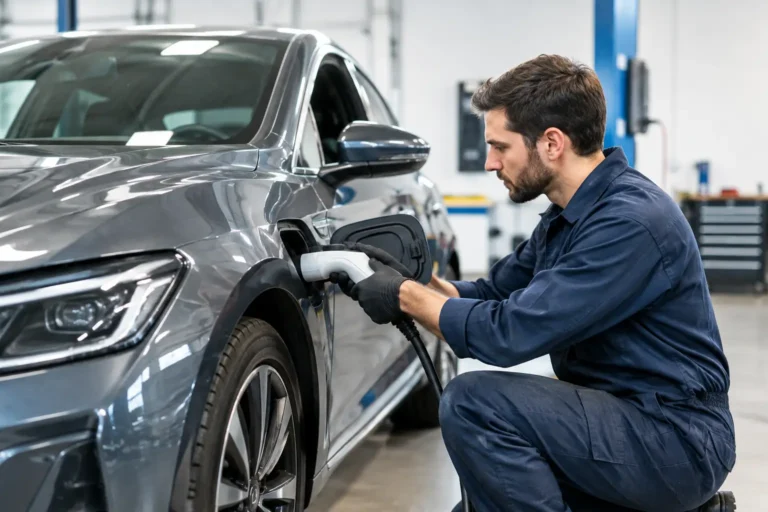
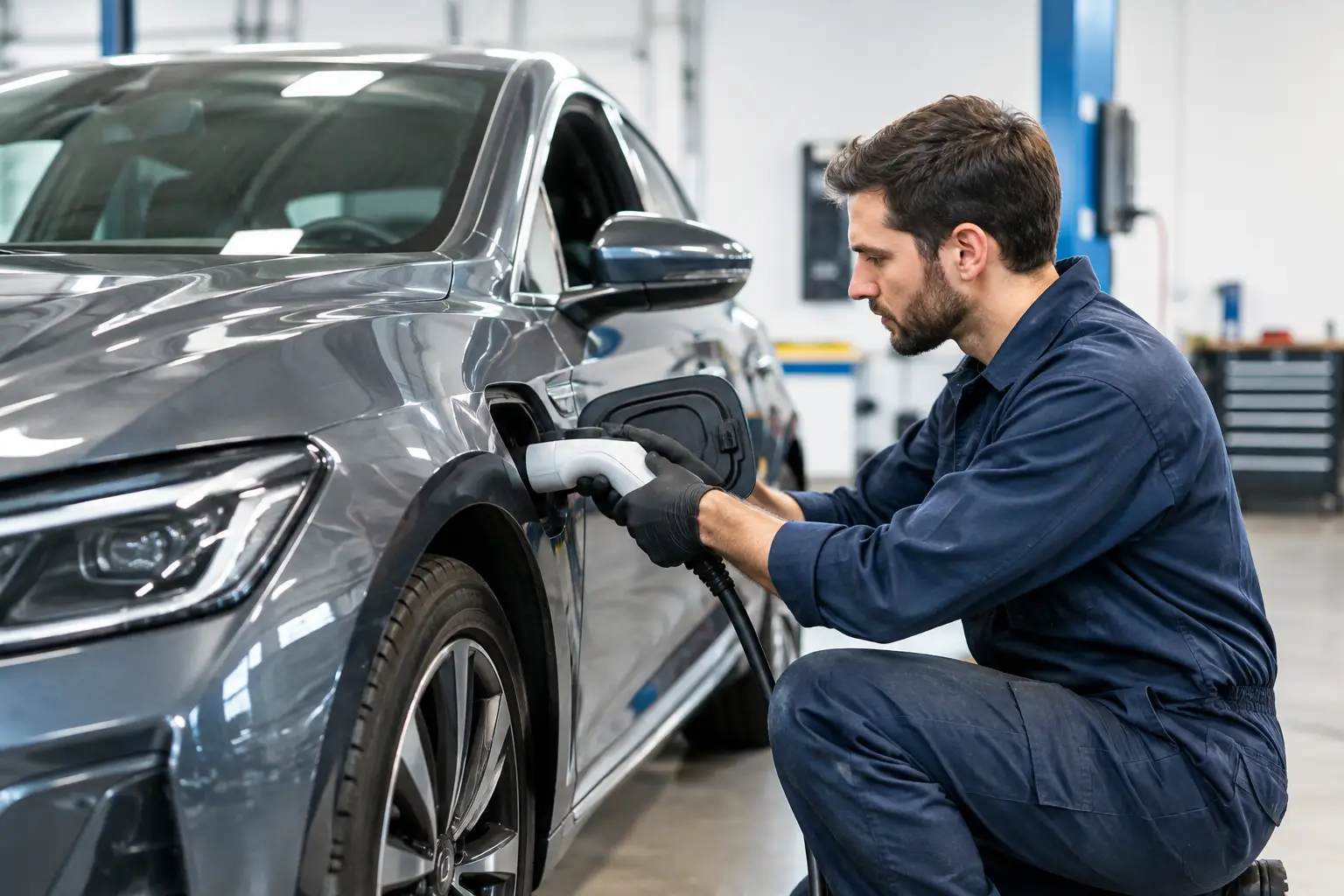
The charging system also deserves attention. The charge port, cables, seals and connections need to be checked for damage, contamination or signs of overheating. Slow or inconsistent charging is not always a battery issue. It can be caused by the vehicle, the cable, the charging point or the software controlling the process. Proper diagnostics help identify the likely cause before parts are replaced.
A comprehensive service should also cover the conventional components that every driver depends on: brakes, tyres, steering, suspension, lights, wipers, screenwash, cabin filters and fluid levels. Electric cars are often heavy because of their battery packs, so tyre condition, correct pressures and suspension health are particularly important for safety, range and even tyre life.
EV brakes need use, not just inspection
Regenerative braking is one of the major benefits of electric driving. It recovers energy when you slow down and can reduce wear on brake pads and discs. The trade-off is that friction brakes may be used less often, particularly on cars driven mainly around town.
Less use can allow brake discs to corrode and caliper mechanisms to become stiff. A car may still feel as though it stops well in everyday driving, while a binding caliper or uneven braking issue develops in the background. During an EV service, brake components should be inspected carefully, cleaned and lubricated where appropriate, and measured for wear and corrosion.
This is especially relevant after wet winter driving, frequent short journeys or long periods parked outside. Addressing brake issues early is usually simpler and more cost-effective than waiting until discs, pads or calipers need replacement.
Software and diagnostics are part of modern maintenance
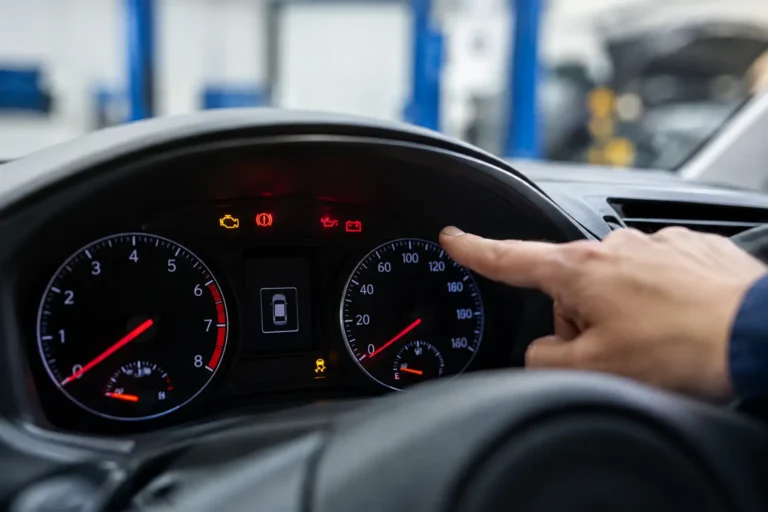
An electric vehicle is as dependent on software and control modules as it is on mechanical components. The systems that manage charging, battery temperature, power delivery, driver displays and safety features continually communicate with one another. A warning light is therefore not always a straightforward mechanical fault.
Professional diagnostics can read stored codes, monitor live data and identify whether a concern relates to a sensor, wiring, charging system, battery management or another module. This matters because replacing parts without confirming the fault can become expensive very quickly.
Software updates may also be available for some vehicles. These can resolve known operating issues, improve charging behaviour or update the way systems communicate. Whether an update is necessary depends on the make, model, current software version and the issue being reported. It should be discussed clearly, rather than presented as an automatic extra.
How often should an electric car be serviced?
The service interval in your handbook or digital service record is the starting point. Many EVs have annual or two-year intervals, with mileage limits that vary by manufacturer. Following that schedule helps protect your warranty, maintain a complete service history and spot problems before they affect reliability.
However, servicing is not the only time to seek advice. Arrange a check sooner if you notice a charging warning, reduced range that cannot be explained by weather or driving conditions, unusual noises, vibration, a change in braking feel or uneven tyre wear. Likewise, damage underneath the vehicle should be inspected without delay. The battery pack is well protected, but a significant impact with a kerb, pothole or road debris should never be ignored.
It is also worth remembering that colder weather naturally affects range and charging speed. Cabin heating and battery temperature management use energy, so a seasonal reduction does not automatically mean there is a fault. A technician can help distinguish normal EV behaviour from an issue that needs attention.
The questions worth asking your EV garage
Choosing a garage for an electric vehicle should feel straightforward. Start by asking whether the workshop works on hybrid and electric vehicles, what diagnostic capability it has for your make and model, and how high-voltage work is handled safely. A good answer should be clear and specific, not overloaded with jargon.
You should also expect an estimate before work begins, an explanation of any advisory items and a conversation about priorities. Not every finding needs immediate repair. For example, a tyre approaching its legal limit or brakes affected by corrosion may need prompt action, while a minor wear item can sometimes be monitored at the next visit. The right decision depends on safety, condition, cost and how you use the vehicle.
At AutoNet VIP, the aim is to give drivers that clarity. Whether your car needs routine maintenance, fault finding or a pre-MOT check, the work should be explained properly so you remain in control of the decision.
Do electric vehicles still need an MOT?
Yes. Once an electric car reaches three years old, it requires an annual MOT just like a petrol or diesel vehicle. The test does not include exhaust emissions, but it still checks the areas that keep the car safe and roadworthy, including tyres, brakes, steering, suspension, lights, seatbelts, windscreen condition and the operation of relevant warning lights.
An MOT is not a replacement for servicing. It is a minimum roadworthiness test at a single point in time. A service is more detailed and preventative, allowing wear, fluid condition, diagnostic faults and manufacturer-recommended maintenance to be addressed before they become a breakdown or an MOT failure.
Simple habits that protect your EV between services
Regularly checking tyre pressures is one of the most useful things an EV owner can do. Under-inflated tyres can reduce range, affect handling and wear more quickly, especially on heavier vehicles. Use the pressure shown on the vehicle placard, not a generic figure.
Keep the charge port clean and dry, and inspect the cable occasionally for splits, damage or discolouration. If the car has friction brakes that rarely get a workout, use them normally and safely when driving rather than relying exclusively on strong regenerative braking all the time. This can help keep braking surfaces in use, although it does not replace a professional inspection.
Finally, take warning messages seriously. Your EV is designed to tell you when a system needs attention. Booking a timely inspection often prevents a minor concern from becoming an inconvenient interruption to charging, commuting or family travel.