A five-minute oil check can prevent the sort of engine damage that turns a routine service visit into a costly repair. Your engine oil lubricates moving parts, helps control heat and carries away contaminants. If there is too little oil, or the wrong amount, the engine cannot do its job safely.
Knowing how to check oil level is useful whether you drive a small commuter car, a family SUV, a van or a hybrid. The method varies slightly between vehicles, particularly newer models with electronic oil readings, but the principles stay the same.
Before you check the engine oil level
Park on level ground and make sure the vehicle is secure. An uneven driveway can give a misleading reading, so it is worth moving to a flatter area if possible.
The ideal timing depends on your manufacturer’s guidance. Many vehicles should be checked when the engine is cold, before starting it for the day. Others can be checked after the engine has been warmed up and switched off for five to ten minutes, allowing the oil to drain back into the sump. Your handbook is the final word, especially on modern vehicles.
Never check beneath the bonnet immediately after a long journey. Hot components can cause burns, and oil that has not settled may make the level appear lower than it really is. Keep a clean lint-free cloth or paper towel to hand.
How to check oil level with a dipstick
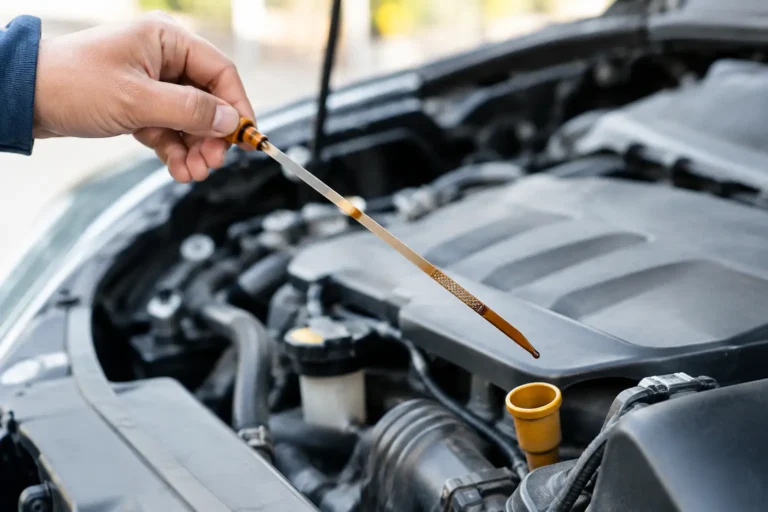
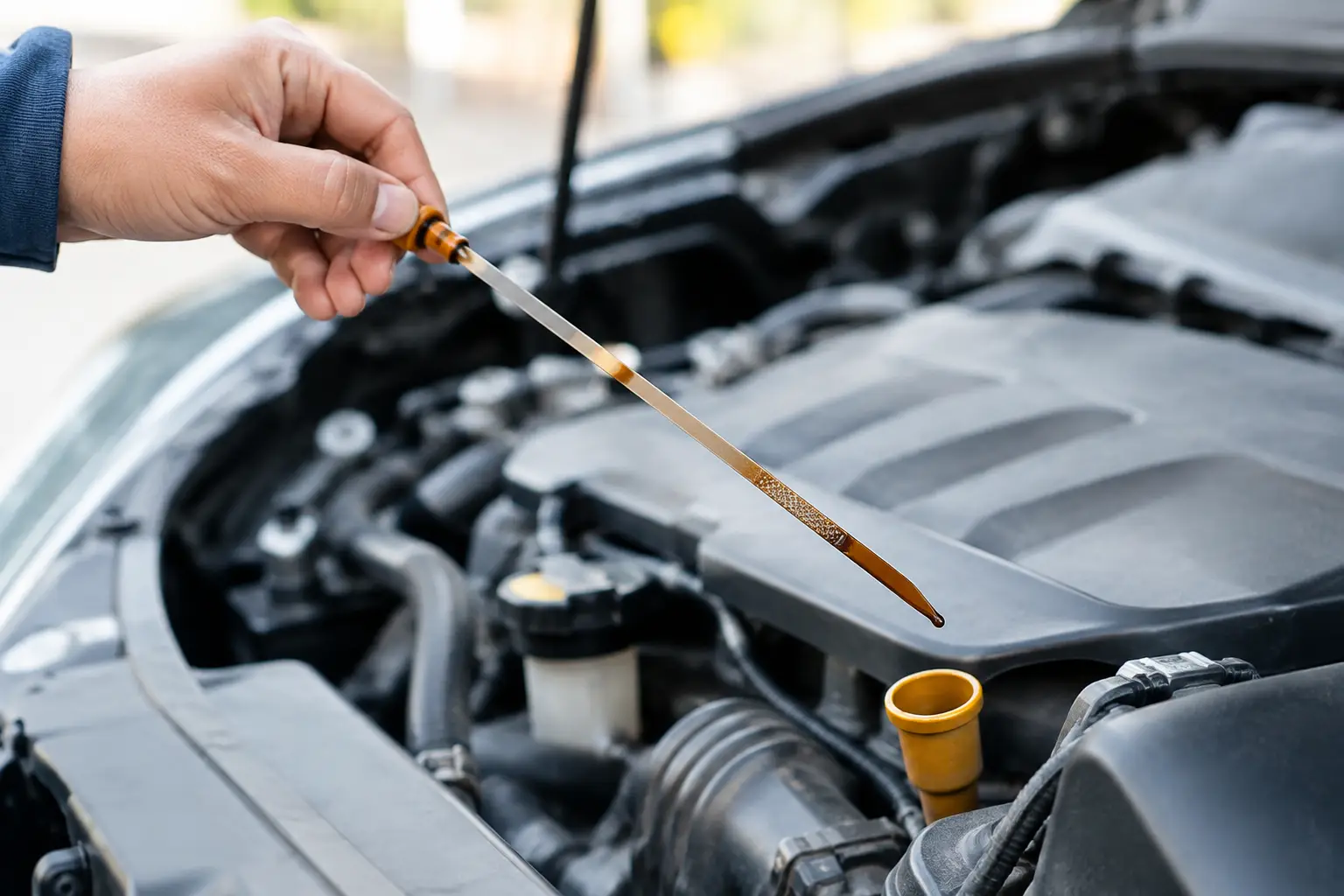
Most petrol and diesel vehicles have a dipstick, usually identified by a brightly coloured handle. With the engine switched off and the bonnet open, locate the dipstick and pull it out carefully.
Wipe the entire metal end clean, then insert it fully back into its tube. Wait a moment, remove it again and hold it horizontally so the oil does not run along the blade. You should see a clear oil line between two marks, holes or notches. These normally indicate MIN and MAX.
The oil level is healthy when it sits between these marks. It does not need to be exactly on the MAX mark. In fact, aiming to fill it right to the top every time can encourage overfilling if you add too much too quickly.
If the level is close to MIN, add oil soon. If it is below MIN, do not ignore it. Running an engine with insufficient oil can lead to excessive wear, poor performance and, in severe cases, major engine failure.
What the dipstick reading is telling you
The gap between MIN and MAX often represents around one litre of oil, but this varies by engine. Do not assume that one litre is correct for your car. Check the handbook or ask a garage if you are unsure.
Oil that looks dark is not automatically a concern. Engine oil naturally darkens as it circulates and collects contaminants. More worrying signs include a thick sludge-like texture, a strong fuel smell, metallic particles, or a creamy beige residue. A small amount of condensation can sometimes cause residue on the oil cap after short journeys, but persistent creamy oil may point to coolant mixing with oil and needs professional investigation.
Adding oil safely
First, confirm the exact oil specification required for your vehicle. The correct viscosity and manufacturer approval matter, particularly for modern turbocharged engines, diesel engines with particulate filters and hybrid vehicles. Using an oil simply because it is labelled for your fuel type is not always enough.
Find the oil filler cap on top of the engine. It usually has an oil-can symbol. Remove the cap and use a funnel if you have one. Add a small amount at a time – around 200 ml is a sensible starting point when the level is just below MIN – then wait a few minutes and check again with the dipstick.
Take your time. It is far easier to add more oil than remove excess oil. Too much oil can aerate as the crankshaft moves through it, affecting lubrication and potentially damaging seals, the catalytic converter or diesel particulate filter. If you have significantly overfilled the engine, avoid driving it and arrange for the excess to be removed.
Once the level is correct, refit the filler cap securely, wipe away any spills and ensure the dipstick is fully seated.
Checking oil level on cars without a dipstick
Many newer cars use an electronic oil-level measurement instead of a physical dipstick. Usually, you will find this in the vehicle information or service menu on the dashboard display. Some systems only provide a reading after the engine has reached operating temperature and been switched off for a set period.
Follow the on-screen instructions and keep the car on level ground. If the system says measurement is unavailable, it may simply need more time for the oil to settle. Refer to the handbook rather than repeatedly starting and stopping the engine.
A hybrid still has a petrol engine and needs engine oil checks and servicing, even though it may use the engine less often in town. A fully electric vehicle does not have conventional engine oil, but it still requires regular inspection of brake fluid, coolant where fitted, gearbox or reduction-drive fluids, tyres and brakes.
When low oil is a warning sign
Engines can use a small amount of oil between services, especially older or high-mileage vehicles. However, needing to top up frequently is not something to dismiss as normal without understanding why.
An external leak may leave oil spots where you park, a burning-oil smell, or fresh oil around the engine. Internal oil consumption can produce blue-grey exhaust smoke, although modern emissions systems can make this less obvious. Problems such as worn piston rings, valve seals, turbocharger faults and blocked crankcase ventilation systems can all contribute.
Keep a simple note of the date, mileage and quantity added. This gives a technician useful evidence if the level keeps falling. It also helps distinguish a gradual, expected change from a developing fault.
Do not confuse the oil warning light with a service reminder
A service reminder means scheduled maintenance is due or approaching. It is not usually an emergency, although it should be booked promptly.
A red oil warning light is different. It can indicate low oil pressure, which means the engine may not be receiving adequate lubrication. Stop as soon as it is safe to do so, switch off the engine and do not continue driving just because the oil level looks acceptable. Low pressure can be caused by several faults, including a failed oil pump, blocked oil pickup or an internal engine issue.
An amber oil-level warning may indicate that the level is low and requires checking. Even then, confirm the message in your handbook and inspect the level before adding anything. Dashboard warnings are valuable, but they are not a substitute for routine checks.
How often should you check your oil?
For most drivers, checking once a month is a sensible habit. Check more often before a long trip, after a warning message, if your vehicle has high mileage, or if you know it has previously used oil. Drivers who mostly make short journeys should also stay alert, as the engine may not regularly reach the temperatures needed to manage moisture and fuel dilution in the oil.
Regular servicing remains essential. An oil check tells you the quantity, but a service addresses oil age, filter condition, leaks and the wider health of the vehicle. If you are not confident identifying the correct oil or reading the dipstick, a professional check is quick and can prevent an expensive mistake.
At AutoNet VIP, we believe car care should be clear rather than confusing. If your oil level is falling, a warning light has appeared or you would simply like reassurance before a journey, having it checked properly is always the sensible next step.